
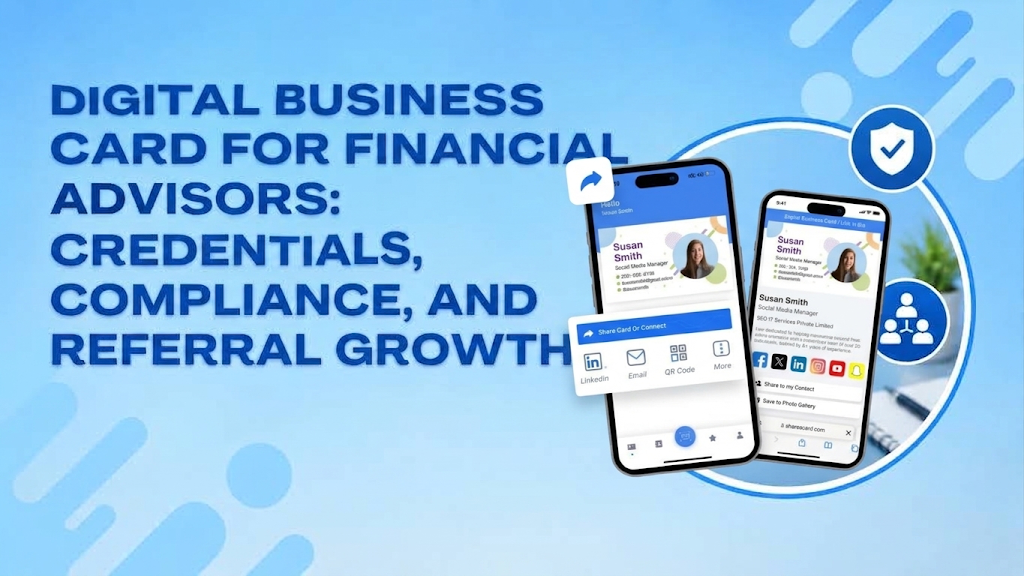
A digital business card for financial advisors solves a problem paper cards were never built to handle: keeping credentials current, tracking referral relationships, and giving a compliance team visibility into what a client actually received. This guide covers what belongs on an advisor’s card, what compliance questions to ask before rolling one out, and how to use it at seminars and referral meetings where most advisory business actually happens.
Why Trust Matters More in This Profession Than Most
Financial advice is sold almost entirely on trust, since a prospect is deciding whether to hand over decisions about their savings, retirement, or estate to someone they may have just met. A polished, professional first impression carries real weight in this context. A paper card that goes out of date the moment you earn a new certification or change firms undercuts that trust before a relationship even starts, while a card that consistently reflects your current credentials reinforces it.
What Belongs on a Financial Advisor Networking Card
A financial advisor networking card should lead with your name, your designations such as CFP, CFA, or ChFC, and your firm name with its logo, since these are the first things a prospect or referral partner checks for credibility. Add a direct link to book an introductory call, since advisory relationships often start with a scheduling step rather than an immediate signup. Include your area of specialization, whether that is retirement planning, estate strategy, or small business advising, so a referral source knows exactly who to send a specific type of prospect to.
Understanding Compliance Before You Roll One Out
Digital business cards used by financial advisors generally fall under retail communication rules that require internal review before use, similar to any other client-facing marketing material. Before adopting a wealth advisor digital card across your practice, check with your firm’s compliance team about content approval requirements and whether usage needs to be logged or tracked, since these obligations exist regardless of which platform you choose. Firms that skip this step risk the same compliance exposure a poorly reviewed print brochure or website page would create.
Building a Finra Compliant Digital Business Card Workflow
A finra compliant digital business card workflow typically means getting your card’s content approved through the same channel as other marketing materials before it goes live, then keeping a record of what version was approved and when. If you update your card later, such as adding a new certification or changing your specialization, treat that update the same way you would treat any other marketing content change, running it past your compliance process rather than editing freely without review.
Setting Up Your Own Card
To create a free digital business card as a financial advisor, start with your name, credentials, and firm affiliation, then add your booking link and specialization details once your firm’s compliance process has reviewed the content. Keep the design clean and professional rather than heavily branded or decorative, since financial clients tend to respond better to a straightforward, credible presentation than an overly stylized one.
Referral Relationships Drive This Business
A large share of new financial advisory clients come through referrals rather than cold outreach, often from accountants, estate attorneys, or other professionals who regularly encounter clients needing financial guidance. A card that makes it simple for these referral partners to reconnect with you, and for you to reconnect with them, supports the ongoing relationship-building that referral-based growth actually depends on. Tracking which referral partners have sent business recently, and which have gone quiet, helps you know where to focus outreach before a relationship drifts.
Seminars and Educational Events
Financial advisors frequently host or attend educational seminars where a room full of prospects is deciding, often within days, whether a follow-up call is worth their time. A digital card shared at the end of a seminar lets attendees save your details instantly rather than losing a paper card in a folder of handout materials they took home. This matters directly for conversion, since the advisors who follow up fastest after a seminar tend to close a noticeably higher share of the interested attendees.
Rolling This Out Across an Advisory Team
For firms with multiple advisors, consistent branding across every card reinforces the firm’s overall professional image rather than leaving each advisor to build something different. If your team already handles a high volume of client meetings and referral introductions, our guide on digital business cards for sales teams covers how to maintain consistent branding and contact accuracy across an entire team, which applies directly to a group of advisors operating under the same firm.
Final Thoughts
A digital business card for financial advisors addresses the specific pressures this profession faces: credentials that change through ongoing education, referral relationships that need active maintenance, and compliance requirements that apply to every piece of client-facing material. Setting one up correctly, with your firm’s compliance process involved from the start, gives advisors a professional, always-current tool for the meetings, referrals, and seminars where most new client relationships actually begin.